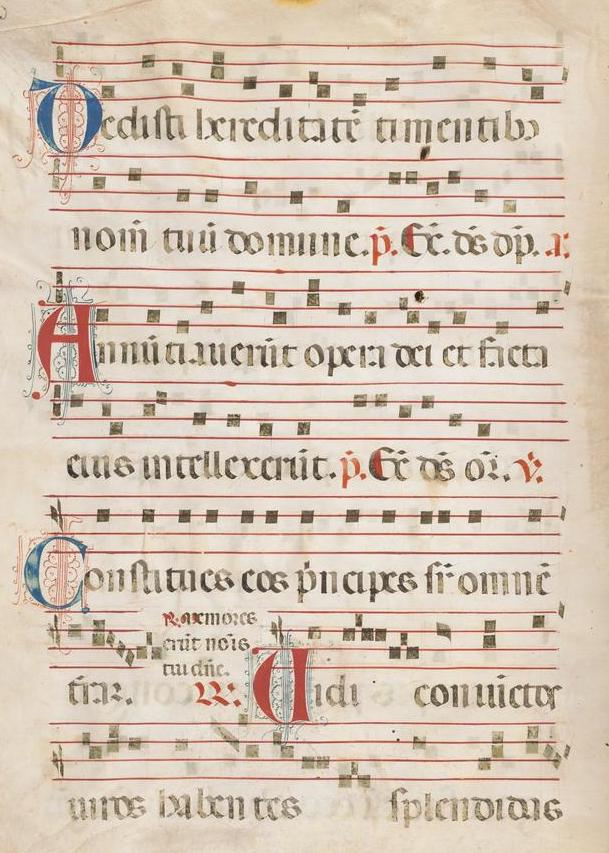
With the knowledge about each type of vertical line acquired from the previous pages, you can scroll though the image of page 8 below to find and learn about vertical lines in situ.
Barnard MS 1, pg. 8
Move the cursor around the image to find vertical lines!
Single Lines
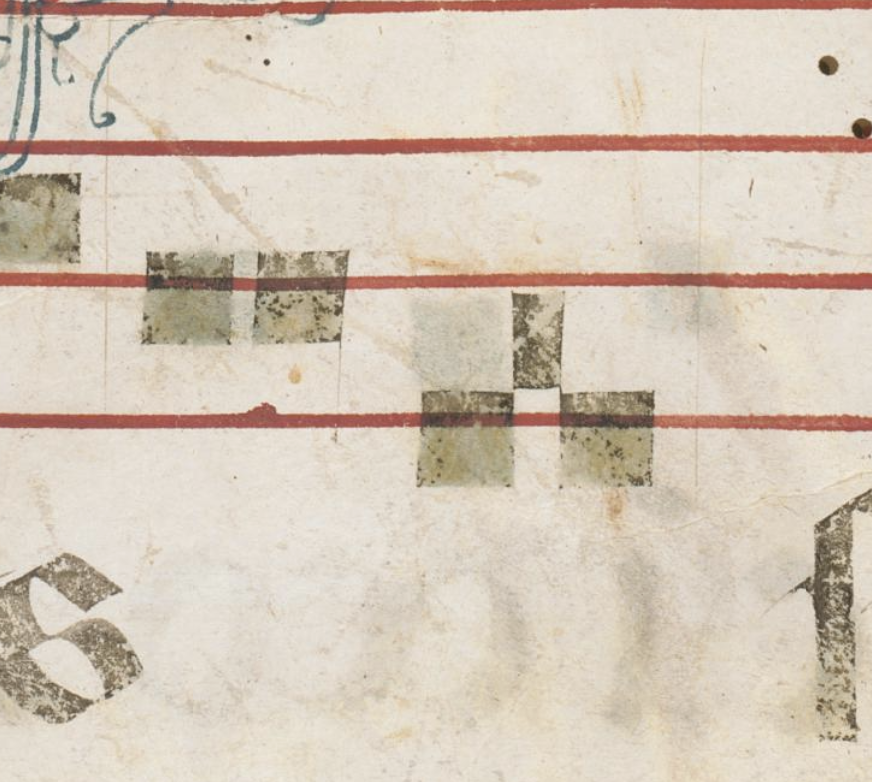
A set of single lines in “habentes” for syllabic differentiation. Placed closely together, they clarify for the performer which pitches should be sung with which syllables.
Single Line
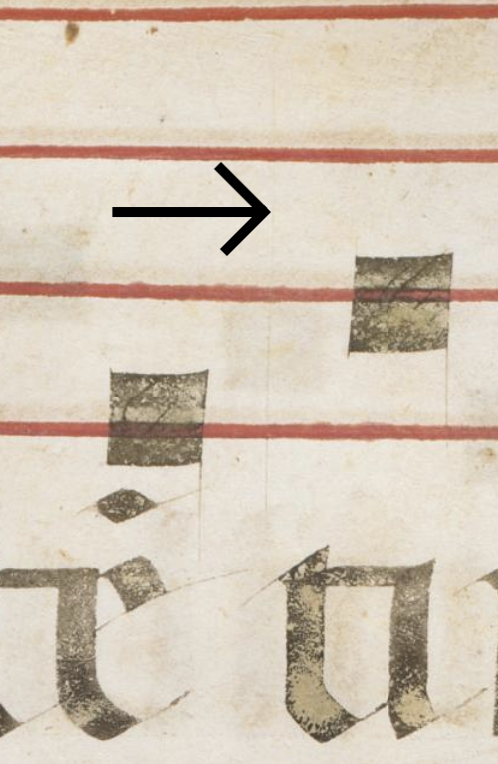
After “hereditatem,” a single line showing a change in performer from cantor to full choir.
Single Line
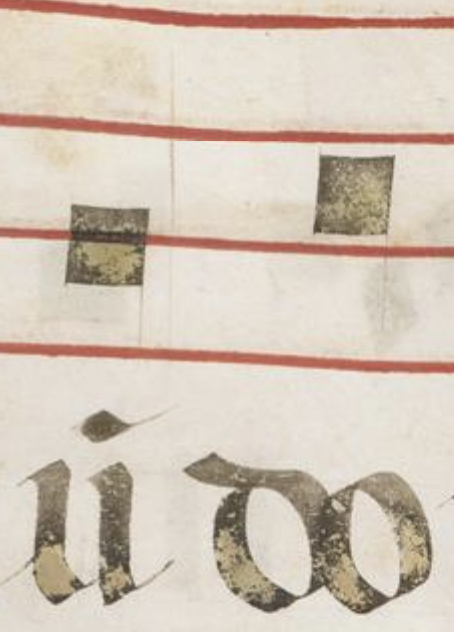
A single inked line after “tuum” most likely for textual clarity, but potentially also marking a breath or phrase ending.
Single Line
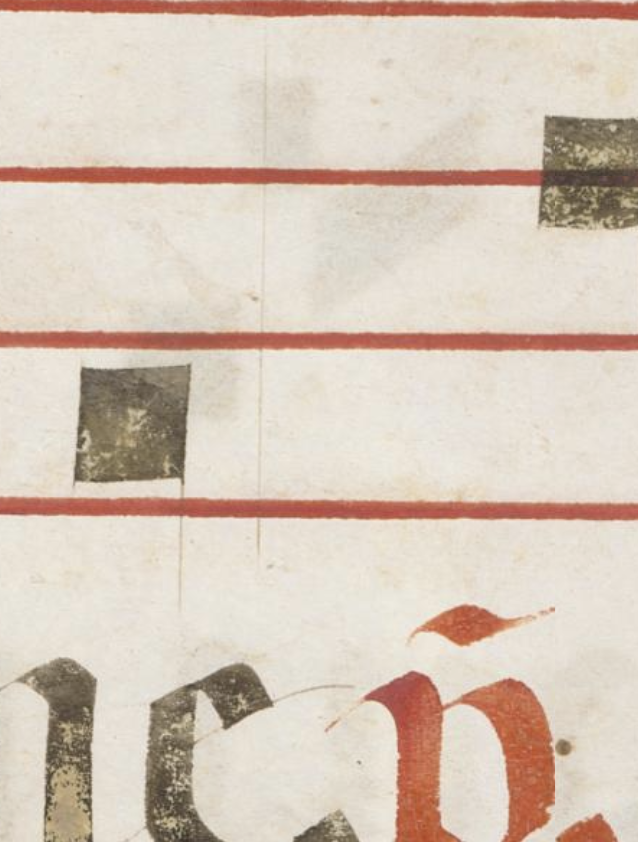
A single line after “domine” showing the end of the chant.
Double Line

A double line after “Annuntiaverunt” denoting a change in performer from cantor-choir. We would expect to see a corresponding double (or single) line at the end of the preceding chant, but the stave end seems to have had the same purpose.
Single Line
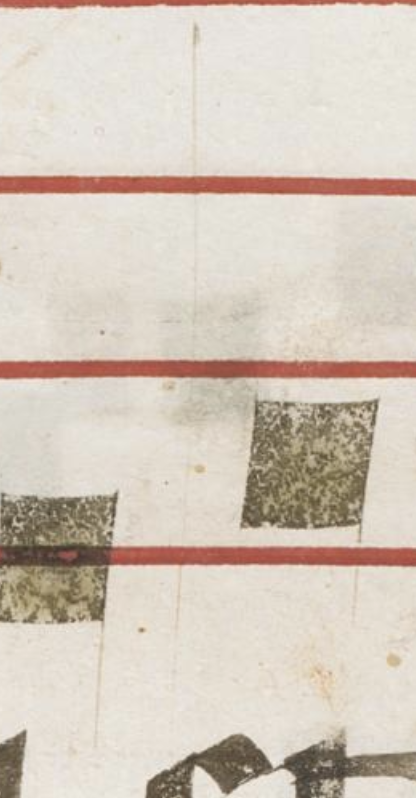
A single line after “dei” for textual clarity. The pitches for “dei” and “et” are poorly differentiated, making this line necessary.
Single Line
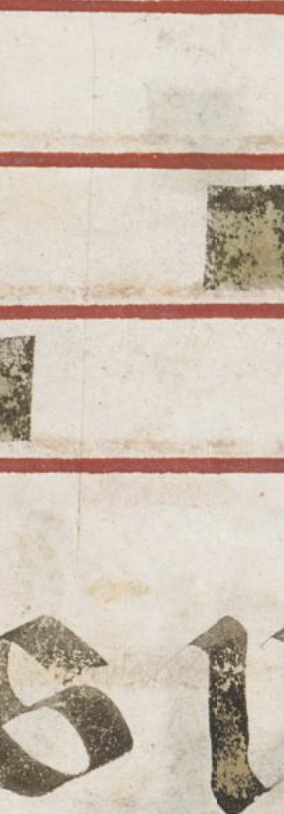
A single line after “eius” for textual clarity. Again, these pitches are placed closely together, making the vertical line necessary.
Double Line
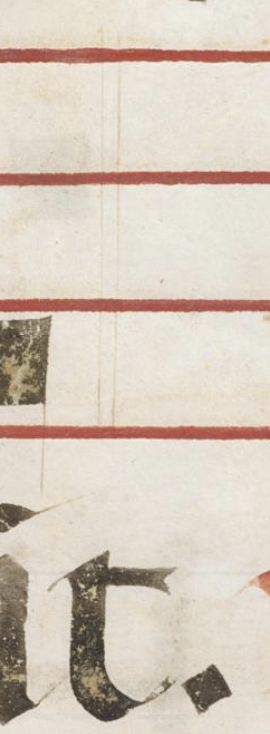
A double line after “intellexerunt” serving to both denote the end of the chant and mark a change in performer from full choir to cantor.
Double Line
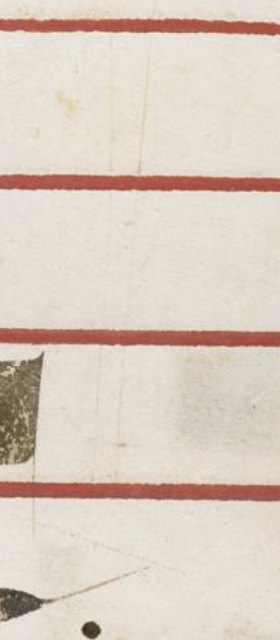
A double line after “orationem” also denoting the end of the chant and a change in performer from cantor back to full choir.
Single Line
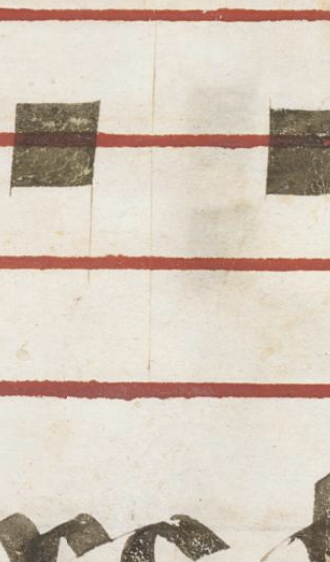
A single line after “principes” acting as a breath mark, or perhaps added for textual clarity.
Double Line
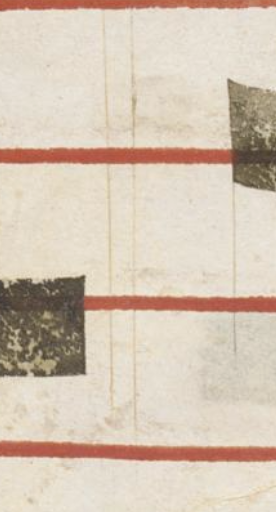
A double line after “Vidi” denoting a change in performer from cantor to full choir. In this case, there is no corresponding double line before “Vidi” because of the rubric.
Single Line
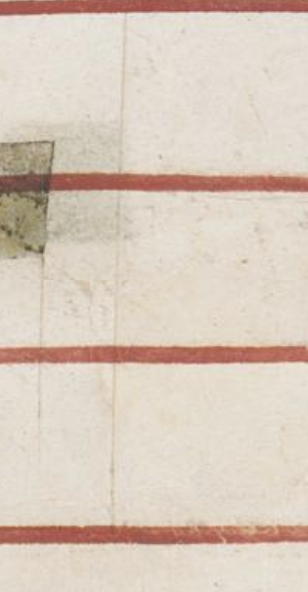
A single line after “viros” acting as a breath mark or perhaps for textual clarity.
